Every quarter, the math gets a little worse. Client acquisition costs climb. Performance channels that used to be reliable return less for the same spend. And the instinct, the one that's worked before, is to spend more, optimize harder, or find the next platform before the returns disappear entirely.
That instinct isn't wrong. It's incomplete.
This isn't a failure of any one CMO's judgment or a gap in expertise. It's a structural shift happening in real time, and no amount of budget fixes it alone, because the math itself has changed. Strategies built entirely on paid acquisition are running straight into the Law of Diminishing Returns, and diminishing returns don't respond to more spend. They respond to less dependency on any single channel to carry the whole strategy.
To be fair, marketers didn't build this trap alone.
How marketing got stuck on the treadmill
There's an economic pattern on one side and a business mantra on the other, and together they've made it hard for marketers to course correct.
Businesses, either by intention or by fear of falling behind, have embraced a simple belief: speed and efficiency lead automatically to growth and profit. So when a new tool arrives promising both, exercising discernment about it starts to look like slow-footedness instead of good judgment. Marketers have always had to vet the latest tool promising results. What's different now is that the newest one, AI, has been so tightly bundled with business narratives about speed and efficiency that vetting it at all can feel like defying a top-down edict.
That's one hand pushing the belt faster. The other push is self-inflicted.
For years, marketers leaned on the same paid acquisition playbook, because at its best, it worked: it delivered results, and results kept the budget conversation easy. But that reliance became a treadmill. Stop spending, and growth stops with it. The channel wasn't a strategy. It was a subscription, and the moment you stop paying, you lose access.
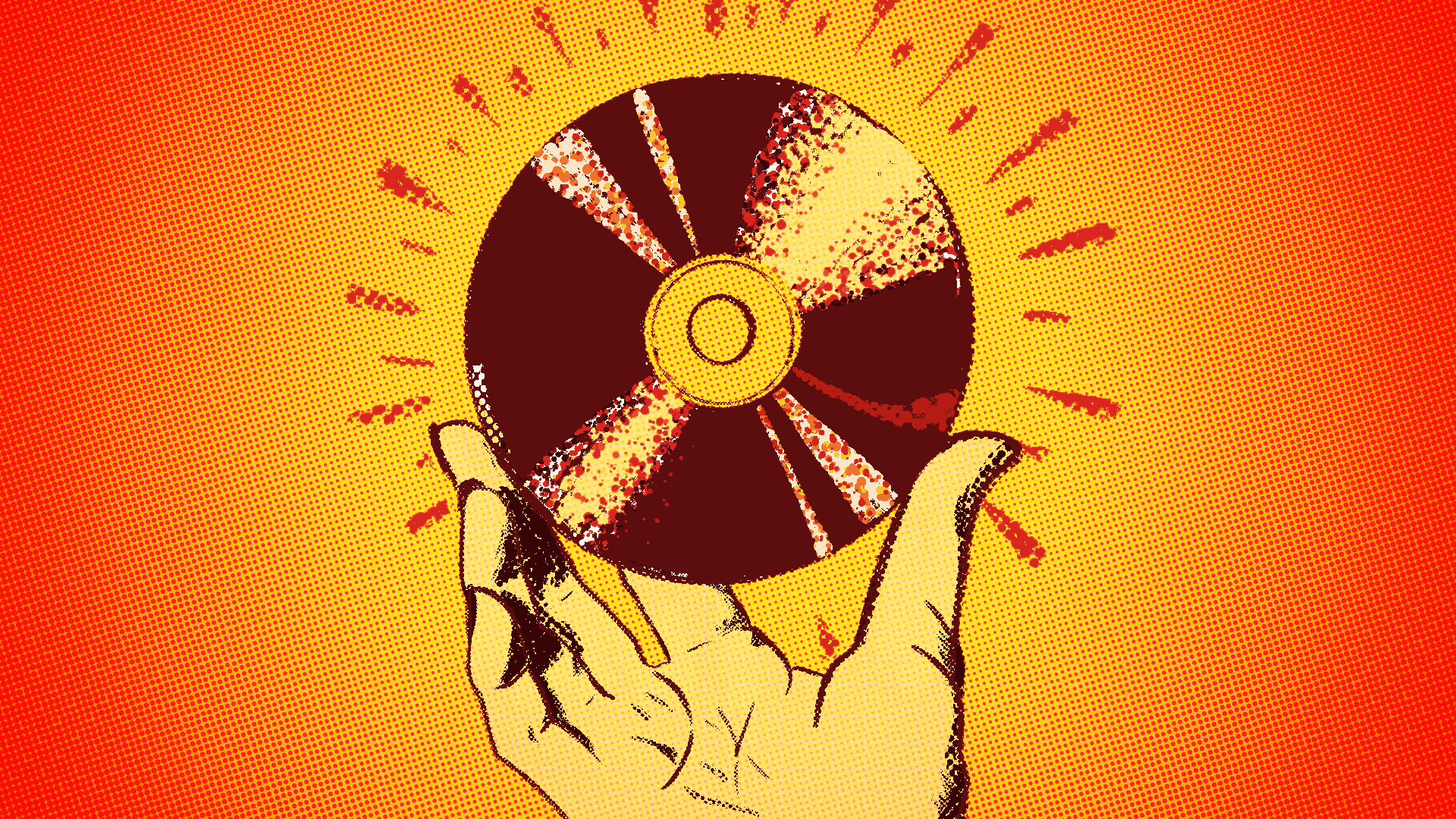
There's a smaller version of this same trade happening in living rooms. Over the last decade, people gave up owning their music, movies, and shows for the convenience of streaming: pay monthly, get access to everything, never touch the object again. It felt like an upgrade, access without the burden of holding onto anything.
But something else got traded away in that deal. A stream doesn't ask you to choose. It serves you the next thing. A record, a disc, a shelf of DVDs someone actually picked and kept, that's the result of a choice, not a subscription. It's part of why a generation raised on infinite, frictionless access is now buying vinyl and burning their own CDs. Not nostalgia. Owning something you chose feels different than being handed something you didn't.
Paid media and AI aren't the enemy. They're part of the equation.
Used well, paid media and AI are essential: faster distribution, faster production, more precision than marketers have ever had access to. No serious growth strategy today works without them.
The problem is what happens when speed and efficiency become the strategy, instead of the tools that execute one. Both paid media and AI-driven content promise the same shortcut: get to the audience faster, with less dependency on the slower, harder work of actually knowing them. Neither tool is built to notice when it's substituting for the audience relationship instead of strengthening it.
Two patterns show up when this gets stretched too thin:
Brand + agency, without the audience. Efficient, expert-made work that forgets to involve the very people it's meant to reach.
Brand + speed, without the audience. Content produced fast and shipped on time, but without real people shaping it, so it doesn't resonate, and sometimes reads as hollow the moment audiences suspect it wasn't made with them in mind.
Neither is a failure of the tool. Both are what happens when the tool is asked to carry weight it was never built to hold alone.
What this is costing the role, not just the results
The pressure isn't only showing up in performance dashboards. It's reshaping how the C-suite sees the chief marketing role itself. Forrester reported in July 2026 that CMO representation in the Fortune 500 C-suite has fallen to 52%, down from 58% the year before. Only 36% of companies still use the title "chief marketing officer," down from 49%, in favor of titles like chief growth officer or chief commercial officer. Marketing leadership turnover hit 23% among Fortune 500 companies last year.
Those numbers aren't a verdict on any individual CMO. They're a symptom of the same underlying math: when a strategy leans entirely on the channels built for speed, the role absorbs the reputational cost when speed alone stops returning what it used to, whether or not the strategy was ever the problem in the first place.
Speed and efficiency without audience engagement isn't a shortcut to results. It's a faster way to arrive at the same wall.
Serving an audience content is easier than building something with them, and it works, for a while. But served isn't the same as chosen, and audiences can tell the difference, the same way a shelf someone actually built feels different than a queue nobody remembers picking.
The marketers pulling ahead right now aren't abandoning paid media or AI. They're pairing them with something most brands have let atrophy: a real, working relationship with the audience they're trying to reach, one built with people instead of aimed at them. Without that foundation, no amount of speed or efficiency reliably connects. It just arrives faster. That foundation takes more time. It's not the most efficient process in the marketing mix. But it's the one everything else depends on, and it shows up in the numbers, not just the sentiment.
What that foundation actually looks like, in practice, is worth a closer look. It's not a return to slower marketing for its own sake. It's a different discipline entirely, one with its own definition, its own proof points, and its own reasons for working, one we'll be unpacking soon.